Skip to content
Specialty Integrations

Case Studies

Better systems. Measurable outcomes.

See how AI, automation, integrations, and better workflows can change the way real businesses operate.

Each implementation starts with a business problem and ends with a number worth measuring.

Find the leverage before building the system.

We start by understanding how the business actually works, where time, money, or opportunity is being lost, and which improvements are worth pursuing.

From there, we prioritize the strongest opportunity, implement the system, measure what changes, and use what we learn to improve the next iteration.

Every implementation should have a number it is expected to move.

Revenue / Cost / Capacity / Speed / Quality / Visibility

WORKFLOWSSOFTWARECUSTOMERSINFORMATIONDECISIONSOPERATING ASSESSMENTFIND THE LEVERAGEOBSERVEPRIORITIZEIMPLEMENTLEARNADAPTMEASURABLE IMPROVEMENT↑ REVENUE ↓ COST ↑ CAPACITY ↓ CYCLE TIME

Case Study 01 / Custom Home Development

Urbanstead Homes

From lot analysis to architect-ready concept — 54% faster.

An AI-assisted workflow brings market demand, site constraints, project economics, and design direction together before detailed architectural work begins.

54%

Faster plan finalization

From initial concept to a more resolved architect-ready starting point.

19%

Lower plan-development cost

Fewer costly revisions during concept development.

The problem

Market research, lot constraints, economics, and design decisions were previously resolved across a slower, revision-heavy process.

What changed

A four-agent AI system now brings those inputs together before the architect begins detailed plans.

  1. Market + Site + Economics + Design
  2. AI-assisted concept
  3. Architect
  4. Permit

System / Claude Code + 4 agents + Apify + Higgsfield + learning layer

AI did not replace the architect. It moved critical decisions earlier in the workflow.
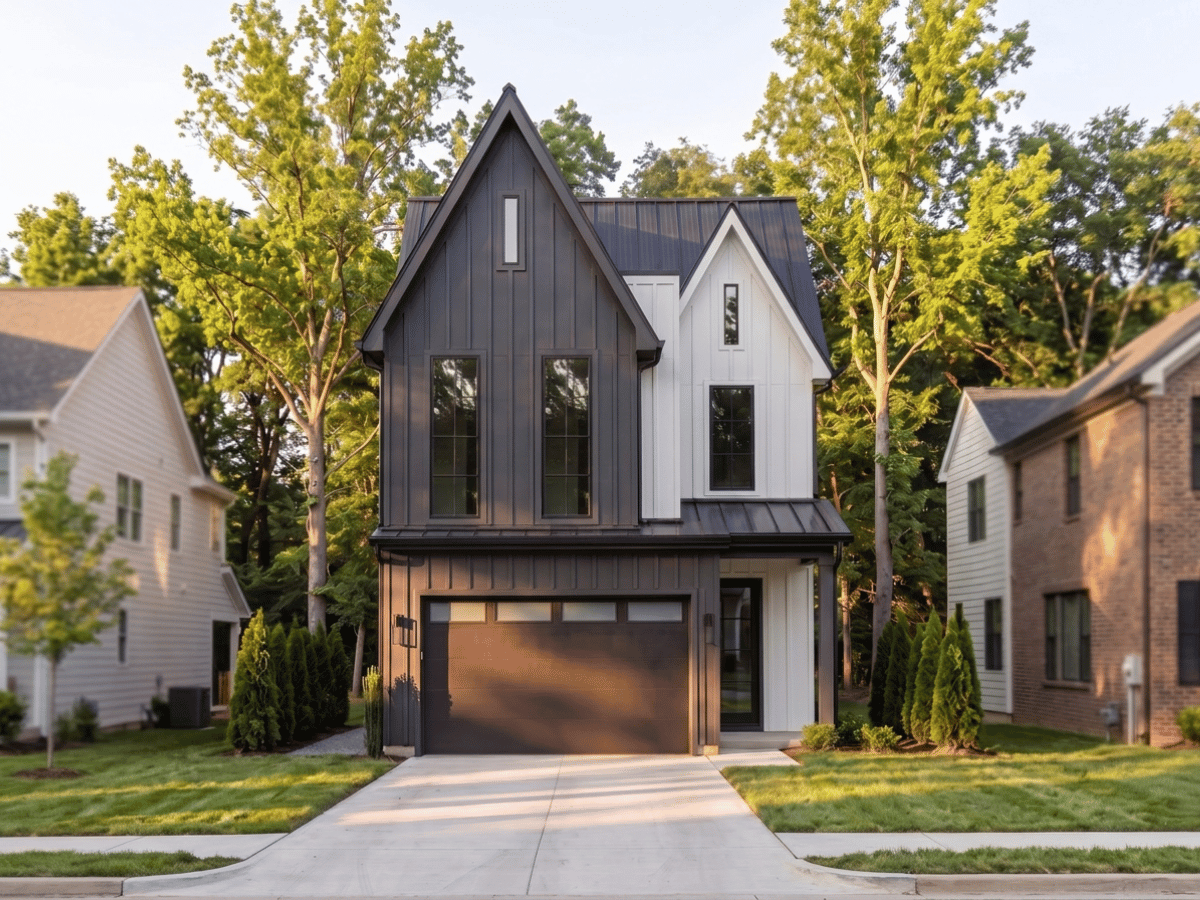
AI-generated exterior design concept for an Urbanstead Homes custom home
AI-generated design concept / Urbanstead Homes

Case Study 02 / Ecommerce

The Design Lab

A connected AI operating system — 114% more production capacity.

The Design Lab connected marketing knowledge, reporting, content production, and departmental workflows into one AI-enabled operating system designed to reduce cost and increase output.

0%

Lower marketing agency cost

Reduced reliance on outside marketing resources by bringing more execution and intelligence inside the business.

0%

Lower content creation cost

Reduced the cost required to produce consistent marketing content.

0%

More production capacity

More than doubled production capacity without scaling manual work at the same rate.

The problem

Marketing and production were spread across outside resources, disconnected platforms, manual processes, and department-specific knowledge. Scaling output meant adding more cost, more coordination, and more opportunities for inconsistency.

What changed

A connected AI system now gives teams shared company context, unifies reporting, automates production steps, and equips each department with specialized agents built around the work they actually perform.

  1. Company knowledge + performance data
  2. Specialized department agents
  3. Automated marketing + production
  4. Measure + improve

System / Company brain + multi-platform attribution + automated production + departmental AI agents

AI did not just make individual tasks faster. It changed how marketing and production operated as a system.

Custom motocross graphics kit produced by The Design Lab
Custom graphics production / The Design Lab

Start with the business

Where could better systems create leverage in your business?

Book a 30-minute intro to talk through where time, money, capacity, or opportunity may be getting lost inside your current operation.

Book a 30-minute intro

America/Chicago

October 2026

SMTWTFS

Loading availability…